
DAVID had just taken over Jerusalem. He had defeated the Philistines. Fresh off these glorious victories, he was eager to bring the ark of God to Jerusalem, the holy city.
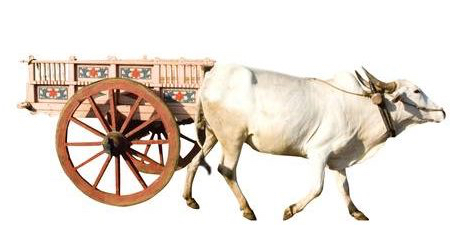
David was enthused. God’s plans seemed to be progressing spectacularly. He gathered 30,000 men together to bring the ark and presence of God into the holy city. A beautiful new cart was built specifically for the purpose. A team of oxen pulled the cart forward, guided by two men named Uzzah and Ahio. The ark of God rested on top of the cart, and God’s presence radiated out from it.
They placed the ark of God on a new cart that they might bring it from the house of Abinadab which was on the hill; and Uzzah and Ahio, the sons of Abinadab, were leading the new cart. So they brought it with the ark of God from the house of Abinadab, which was on the hill; and Ahio was walking ahead of the ark. Meanwhile, David and all the house of Israel were celebrating before the LORD with all kinds of instruments made of fir wood, and with lyres, harps, tambourines, castanets and cymbals.
2 Samuel 6:3-5
Everyone was excited. They were singing, dancing, and praising God. They were marching with God’s presence in a grand parade into the holy city. Shouts of Hallelujah pierced the air. The excitement was palpable. The musicians were rocking the crowd. The brand new cart with the ark of God was at the center of their celebration.
Uzzah was the cart-driver. His name means strength. In those days, the word uzzah was also used as an exclamation when getting something done. Workers would shout out uzzah! uzzah! to encourage each other to complete a task. Ahio means brotherly. Ahio guided the cart from the front.
The strength of man united the Israelites together as brothers, while they enthusiastically brought the ark up to Jerusalem on a cart.
Man’s Ways Replace God’s Word
There was one serious problem, however.
The Bible gave specific instructions about how the ark was to be carried. It said the priests were supposed to carry the ark directly using poles inserted into rings on the ark’s sides.
And you shall put the poles into the rings on the sides of the ark to carry the ark by them.
Exodus 25:14
God wanted the priests to carry the ark by hand using these poles. This was God’s prescribed plan. This divine plan precluded all others.
God never told them to make a cart.
David and the others didn’t think it mattered. Maybe they forgot about those specific instructions in the Bible about poles. Or maybe they thought God didn’t really care about such minor details.
They may have faintly remembered this obscure verse in the Bible, but for some reason they thought it didn’t apply to them. “Carrying things by hand was fine for the old days, but times have changed. We’re not wandering around the wilderness anymore, we’re in the Promised Land! This is a new dispensation. Those poles were fine for the beginning with Moses, but no longer. They only had tents back then, and now we’ve got cities and houses. Poles have ceased. God’s working differently today!”
Using a cart to carry the ark seemed like progress. Carts are more stable. Oxen are stronger. They won’t get tired so quickly. Man’s organizational skills took over from God’s primitive ways. “God has given us oxen, so let’s use them!”
It all made so much sense. They didn’t need to stick with God’s word when they had such great ideas of their own.
God works through holy people to accomplish his purposes in the earth, while man prefers machines.
Judgment on Human Religion
The rollicking procession began to slow down. The oxen stumbled and tripped, and the cart tipped. The precious ark of the covenant was about to crash down on the dirt.
But when they came to the threshing floor of Nacon, Uzzah reached out toward the ark of God and took hold of it, for the oxen nearly upset it. And the anger of the LORD burned against Uzzah, and God struck him down there for his irreverence; and he died there by the ark of God.
2 Samuel 6:6-7
It can be hard to keep religious activity going when it’s not based on God’s word. Seeing the cart about to fall, Uzzah reached out to stabilize the whole thing.
Suddenly Uzzah died. God’s presence had killed him. There was too much of God in this gathering as well as too much of man’s dead religious ways. These two forces couldn’t coexist for long.
The dead body of their cart-driver stopped their religious celebration. ‘Revival’ came to a screeching halt.
Uzzah shouldn’t have touched the ark (Numbers 4:15), but the problem was deeper than that. The entire cart was contrary to God’s word. God never told them to make that cart. He never said they could just do “religion” in their own way and ignore his word.
They were trying to please God by disobeying him. This is insane.
They prophetically called the name of this place Perezuzzah – the breaking of Uzzah. At this place the religious strength and wisdom of man was broken.
David was discouraged. He didn’t know what to do. He wondered how he could ever bring the ark up to Jerusalem. He was so upset with God that he left the ark sitting in a shed on the roadside.
Getting Back to God’s Word
Months later, after stewing in Jerusalem, David finally figured out the problem. God had a precise way he wanted the ark to be transported, and he had ignored it.
Maybe David had read the Bible and found out God’s plan. Or maybe someone showed him what God’s word said. Somehow David discovered that God had a specific way to do things. He repented.
Inspired by a recovery of the word of God, he told the priests to carry the ark as God originally instructed.
He said to them, “You are the heads of the fathers’ houses of the Levites; sanctify yourselves, you and your brethren, that you may bring up the ark of the Lord God of Israel to the place I have prepared for it. For because you did not do it the first time, the Lord our God broke out against us, because we did not consult Him about the proper order.”
So the priests and the Levites sanctified themselves to bring up the ark of the Lord God of Israel. And the children of the Levites bore the ark of God on their shoulders, by its poles, as Moses had commanded according to the word of the Lord.
2 Chronicles 15:12-15
They started to bring up the ark again. This time, they obeyed God. They consulted his word, not their own minds. They did it according to his order, not their own. There was no cart this time, and no oxen. They just used priests and poles – God’s original way.
There was humility now. There were sacrifices. There was the sound of a trumpet, symbolizing a clear revelation of the word of God (1 Cor. 14:8). Intense joy filled David’s heart as the ark came into the holy city. He was doing God’s work in God’s way, and that made all the difference.
David danced with abandon as God’s presence came in among his people, and the ark came into the tabernacle he had prepared for it.
Now all these things happened to them as examples, and they were written for our admonition, upon whom the ends of the ages have come.
1 Corinthians 10:11
Christian Carts
The ark symbolizes the presence of God, and we desperately need God’s presence today. Otherwise our religion is pointless.
In order to get God’s presence, we come up with all kinds of ideas. We build things, construct things, and come up with many Christian ways in order to manifest “God’s presence”.
Our Christian arenas are grand. People come running in, celebrating “God’s presence” along with us. We have lights, sounds, smoke machines, rock bands, organizational systems, and powerful orations. But we’ve really just made our own carts – religious machines we’ve constructed in order to manifest “God”.
We need to learn our lessons from David. God is not going to bless human religious carts, whether they are David’s or our own. God is not coming into our midst through the means of our own clever religious ideas. We might like our religious contraptions. They might make us feel good. But that doesn’t mean God likes them.
We must get back to the word of God. We need to humble ourselves and recover the instructions of the New Testament. We may think the New Testament commands are about minor issues. Maybe we even think they’re a little bit strange. But they are vitally important to God.
As David discovered, we ignore God’s instructions to our own peril. Whenever we try to serve God in our own ways, we actually rebel against him.
Because we disregard God’s word, he is often absent from our religious celebrations. This might sound bad, but it’s actually because of his mercy. If God showed up in the midst of contemporary Christianity, there might be terrible judgment – just as there was on Uzzah, or on Ananias and Sapphira in the book of Acts (Acts 5:1-11).
God is not looking for our clever religious ideas. He doesn’t need them. He doesn’t even like them. He’s looking for submission to his word. He wants holy people who will carry his presence into the world in his own way, through submission to his will. Through them, his awesome presence will come.
Someday soon, the religious carts of men are all going to be overturned and left scattered on the roadside. The holy priests of God who do God’s work in God’s way are going to bring God’s presence into his holy city. Then they’re going to dance in the Lord, as his glory is revealed and his name is exalted over all.
 Bethel Cornerstone
The Lord opened my eyes to this passage also. I posted an article last February called, “God is still Holy…”
I have learnt a few more nuances from your article, which has blessed me. Thank you for sharing your thoughts.
God bless
Helen
Hi Helen, thanks for dropping by. This must be an important truth to the Lord that he is speaking to his saints at this time. God is preparing us to do things in his way, not our own way, for his ways are the only ways that are going to work.